

Step outside on a warm spring morning and you’ll see what children have always known: the world is full of invitations to learn. A gloppy puddle, a squirrel leaping from branch to branch, a patch of soft moss that looks like an alien world up close: each sparks curiosity, conversation, and discovery.
At The Antioch School, we believe children deserve the time, space, and freedom to follow those invitations. Our days are rooted in nature, rich with play, and intentionally screen‑free. In a world where schedules are packed and devices compete for attention, this approach matters more than ever.
The Power of Nature in Learning
Nature as a Teacher
At The Antioch School, we see our campus as more than a backdrop—it’s a co-teacher. Our wooded classrooms, open fields, and gardens provide endless opportunities for children to explore, problem-solve, and learn through direct experience.
As this study published in the National Library of Medicine notes, “Nature-based environments function as a play partner that helps children to transform the perceptual world into a conceptual world[…]. Nature play has outcomes for cognitive, social-emotional, and motor development.”
This kind of learning is impossible to replicate in a classroom alone—it’s dynamic, messy, and highly individualized.
When children explore the equipment on the playground, wade through the creek during our weekly hikes in Glen Helen, dig in the school garden, or watch seeds sprout, they’re building balance, coordination, patience, and problem‑solving. They’re practicing resilience, nurturing curiosity, and developing a real relationship with the living world.
On any given day you might see:
- Older Group students using the outdoor classroom space to create a richly imagined scenario in which they are characters in a survival role-play.
- YG children pulling a friend around the cycle circle in a wagon as other classmates ride on unicycles and skateboards.
- Kindergarten students learning about the changing of the seasons during their weekly Forest Kindergarten day where they start their school day dropped off to their outdoor classroom – no matter the weather!
- Nursery students gathering interesting leaves and sticks and tucking them away into their nature collection, not because a teacher told them to but because they find them interesting.
These experiences can’t be replicated on a worksheet or a tablet. They happen in fresh air, with real materials, alongside friends.
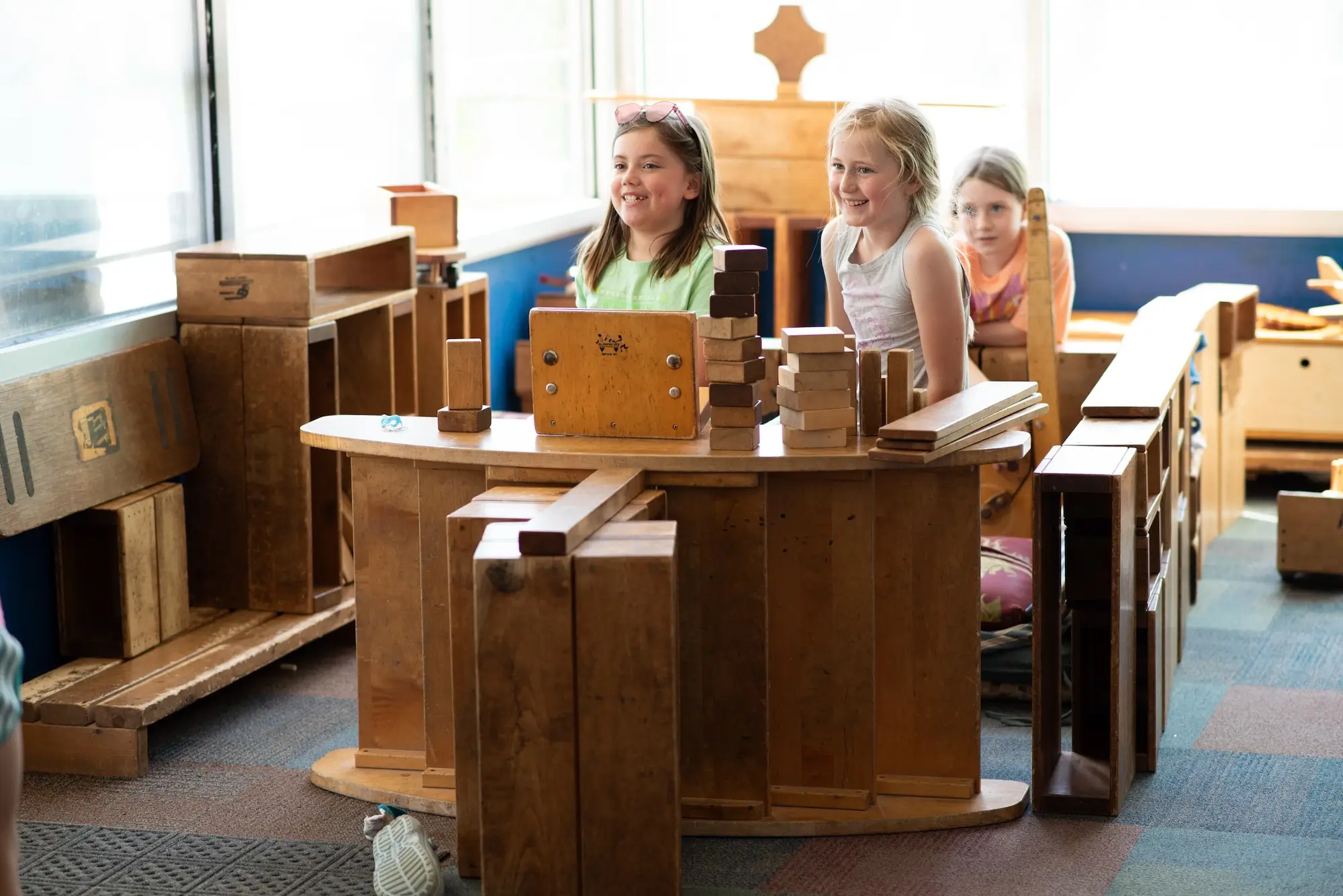
Why Play Is Serious Learning
Play is how children make sense of the world. Through play, they test ideas, practice social skills, take reasonable risks, and solve problems.
At Antioch, play is woven through the day:
- Imaginative play builds empathy and creativity as children invent roles, rules, and stories.
- Collaborative play teaches negotiation, leadership, and communication.
- Physical play strengthens bodies and builds persistence.
A “classroom store” becomes a study in large-scale collaboration and economics. A game of chase evolves into a child‑invented sport with shared rules and fair play.
The Gift of Screen‑Free Time
Screens have a place in modern life, but for school-aged children, too much screen time can crowd out essential, hands‑on experiences. That’s why Antioch is screen‑free during the school day.
Instead of being told about the world, students engage with it directly:
- They don’t watch a video about insects — they lift a log to see what’s living underneath.
- They don’t “visit” a forest through a simulation — they step into the real one.
- They don’t swipe to mix colors — they blend paints with their own hands.
Families with children who come from other learning environments often tell us they see the difference at home: less anxiety, more stories, more ideas, more creative play.

Growing Responsibility and Autonomy on an Unfenced Campus
Our 9-acre campus has no perimeter fences. That’s intentional. Children learn and respect natural boundaries as part of their social and emotional growth — a core feature of democratic education at Antioch.
This independence is scaffolded over time:
- Nursery (ages ~3½–5): Children begin in the smaller side playground, a defined area where they learn the basics of safety, staying with the group, and caring for shared spaces. Teachers model language like, “How do we know where we’re allowed to go?” and “What’s our plan if we need help?”
- Kindergarten & YG: As children show readiness, their boundaries expand. They explore additional outdoor areas and trails with clear expectations and community agreements — deciding together how to move, how to care for the land, and how to include others. Teachers facilitate reflection: “What went well today? What should we change tomorrow?”
- Older Group (OG): With years of practice, students have the run of the full campus. They exercise judgment, honor agreed‑upon meeting points and times, and take responsibility for themselves and the group. Freedom is paired with accountability: students help care for the school grounds, watch out for younger peers, and adapt plans based on weather and conditions.
Throughout, teachers carefully monitor children’s well‑being, model risk assessment (“What’s the safest route across the stream?”), and uphold agreements the community has made. The goal isn’t to remove all risk; it’s to help children learn to manage it by developing autonomy, self‑control, and genuine respect for shared spaces and one another.
Why This Matters Now
Many children today spend more time indoors than outdoors, and hours each day on screens. Yet the skills most needed for a healthy, connected life are built through unplugged, real‑world practice: focus, empathy, creativity, and problem‑solving. Nature, play, and graduated autonomy cultivate exactly those capacities.

How Antioch Makes It Happen
Every day, students at The Antioch School:
- Spend extended, unstructured time outdoors in all seasons.
- Engage in open‑ended play with natural and repurposed materials.
- Learn at their own pace, guided by curiosity and community needs.
- Practice democratic decision‑making and honor community agreements.
- Build independence through scaffolded campus freedoms — from the Nursery side playground to full‑campus access in OG.
- Grow without classroom screens, strengthening attention, imagination, and relationships.
For more than 100 years, our democratic school has nurtured these timeless experiences — and watched children flourish
See It for Yourself
Come explore our campus, peek into our play spaces, and feel how nature, play, and screen‑free days shape a joyful education.
Schedule a tour or learn more about our philosophy. We’d love to meet you.


